AI PERSONALIZATION: FROM DATA TO DYNAMIC EXPERIENCE
Transforming customer signals into real-time, individualized product experiences.
SIGNALS → INTELLIGENCE → EXPERIENCE
Moving beyond static segmentation to adaptive, intelligent systems.
AI personalization dynamically adapts experiences based on user behavior, preferences, and context.
Instead of relying on predefined rules or segments, modern systems continuously learn from user signals to predict what a user wants, when they want it, and how they want to experience it.
HOW PERSONALIZATION SYSTEMS WORK
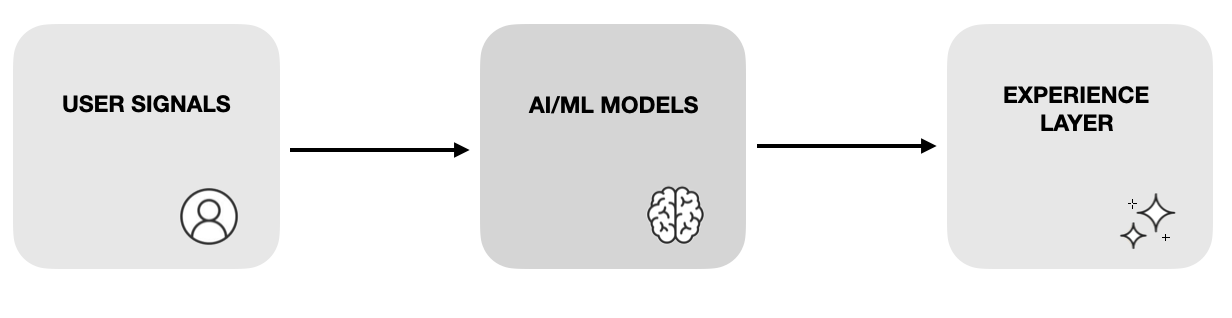
At a high level, personalization systems connect three core components:
User Signals — behavioral, transactional, and contextual data
AI/ML Models — systems that identify patterns and generate predictions
Experience Layer — where personalization is delivered to the user
Each layer builds on the previous one—transforming raw data into meaningful, individualized experiences.
Where personalization often breaks down is not in the model—but in the data.
At scale, effective personalization depends on:
Unified customer identity across systems
Clean, high-quality data inputs
Consistent profiles that models can reliably learn from
Without this foundation, even the most sophisticated models produce inconsistent results.
HOW PERSONALIZATION EVOLVES
Rules-Based
"If a user buys X → show Y"
Segmentation
Grouped experiences based on shared behaviors
Predictive AI
Recommendations based on patterns across similar users
Real-Time Personalization
Dynamic experiences adapting to live behavior and context
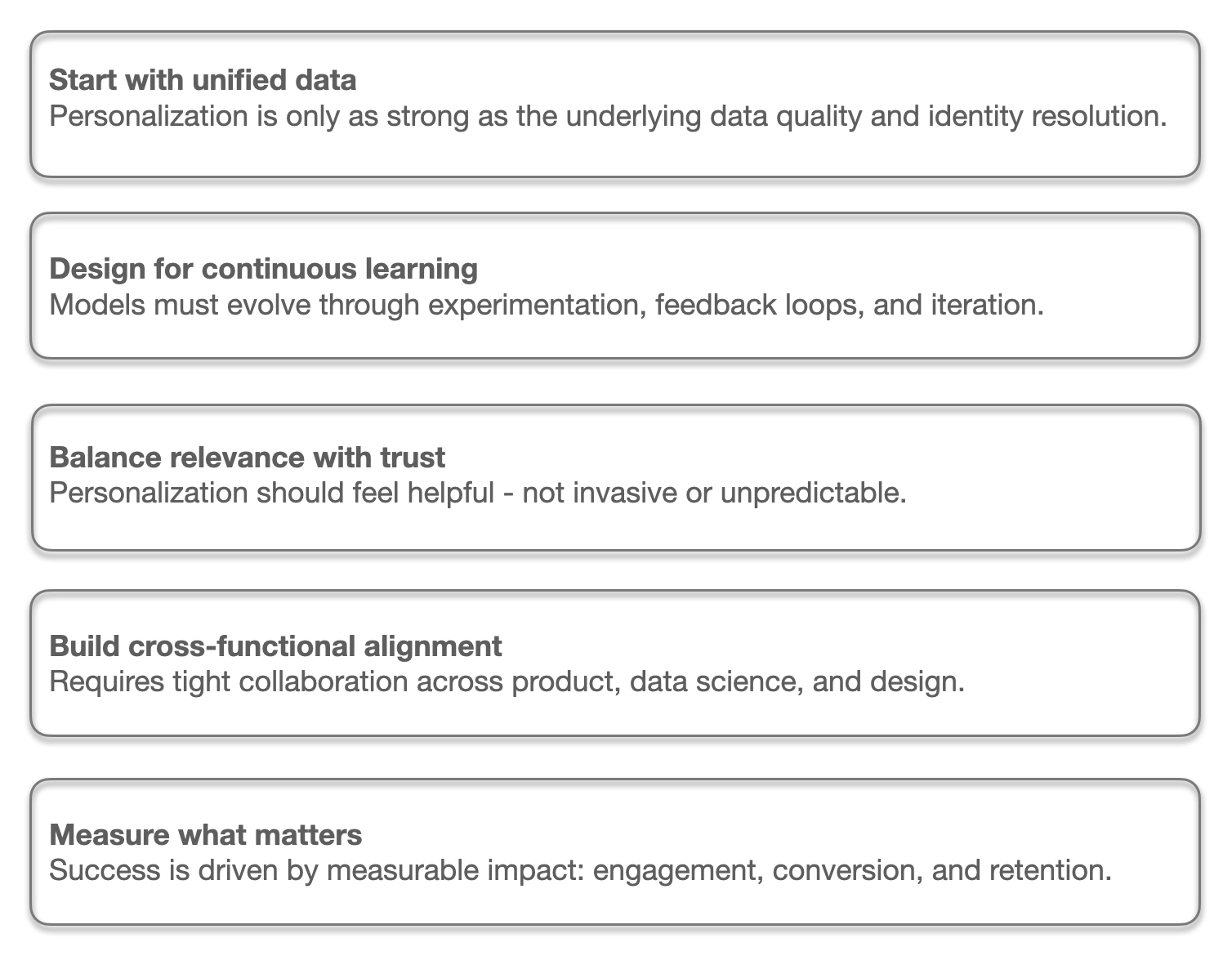
HOW I THINK ABOUT BUILDING PERSONALIZATION SYSTEMS
WHERE PERSONALIZATION IS GOING
The next evolution of personalization is adaptive and agent-driven.
Instead of reacting to past behavior, systems will:
Anticipate user needs
Act on behalf of the user
Continuously optimize experiences in real time
Personalization becomes less about recommendations—and more about intelligent assistance.